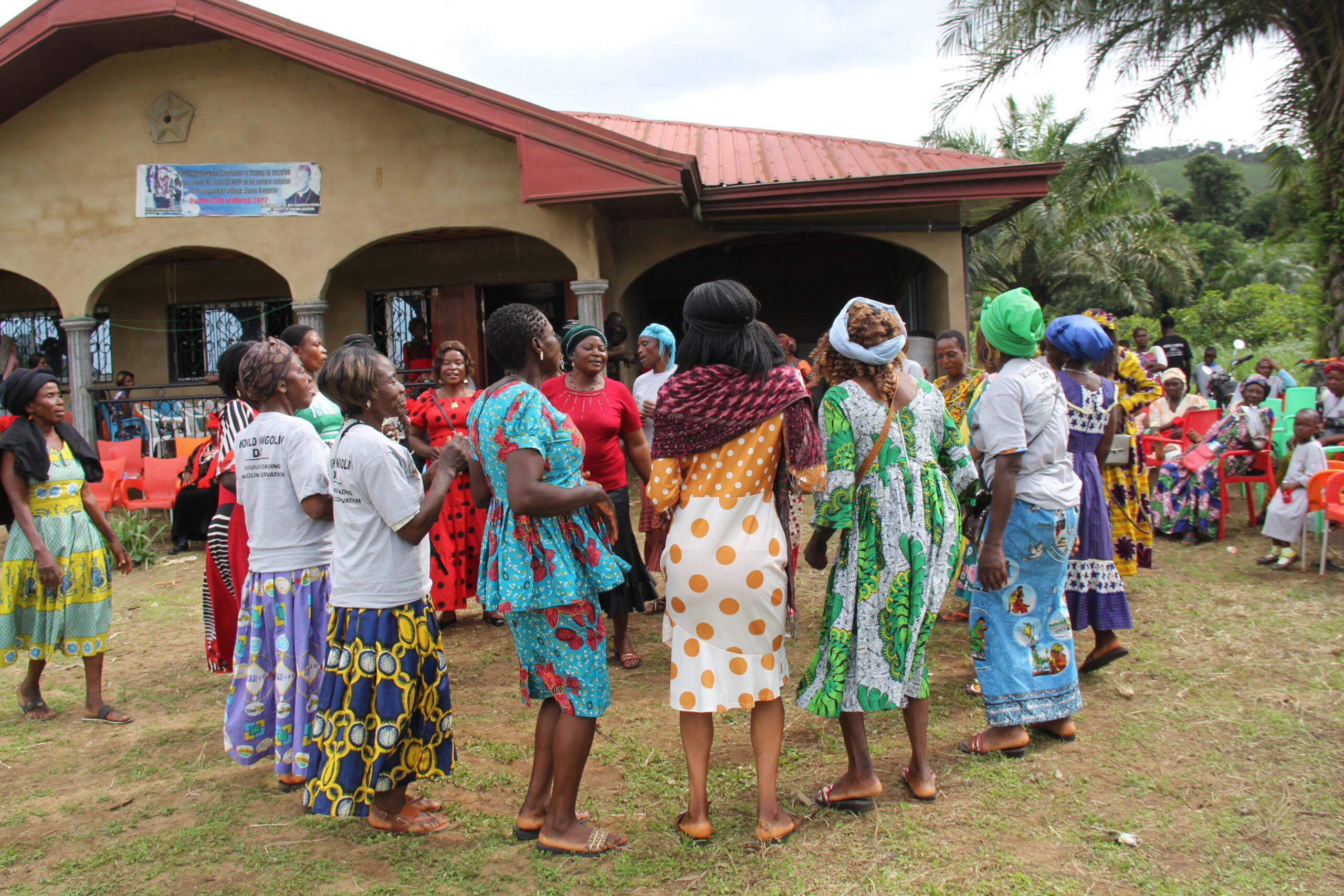
Working Together for People, Wildlife and the Forest
Banyang-Mbo Wildlife Sanctuary is more than a protected area. It is a living landscape where biodiversity, culture, livelihoods and conservation are closely connected. The communities around the sanctuary have long depended on the forest for food, medicine, farming, cultural identity and traditional knowledge. For this reason, conservation in Banyang-Mbo is built around collaboration with local people.
The sanctuary service works with communities, local institutions, traditional authorities, schools, women’s groups, youth groups and conservation partners to protect wildlife while supporting sustainable livelihoods. This community-based approach recognizes that long-term conservation can only succeed when people living around the forest are actively involved and benefit from protecting it.
Community-Based Conservation
The management of Banyang-Mbo Wildlife Sanctuary follows a collaborative conservation model. The sanctuary is managed by the Ministry of Forestry and Wildlife, with active involvement of local communities in monitoring, awareness creation and surveillance activities.
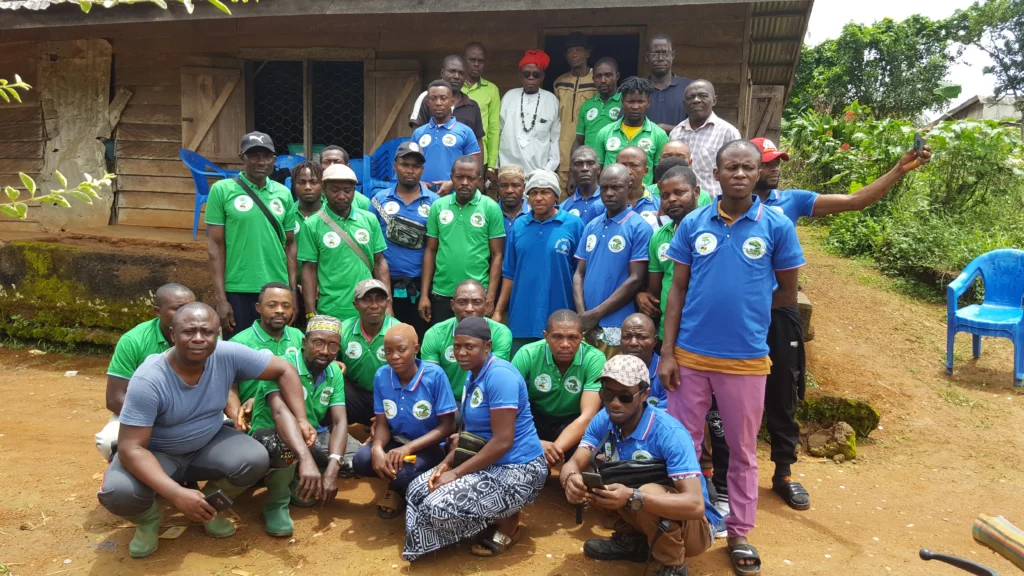
Community-based surveillance is regularly organized in key conservation hotspots. During these activities, community members, eco-guards and local field actors work together to remove wire snares, identify illegal hunting signs, destroy hunting huts and sensitize people on wildlife laws. These patrols help reduce illegal activities while strengthening trust between sanctuary management and surrounding communities.
This participatory model is important because traditional top-down conservation alone has not been sufficient to stop forest degradation and wildlife decline. By involving communities directly in conservation actions, Banyang-Mbo Wildlife Sanctuary promotes shared responsibility for the protection of endangered species and forest habitats.
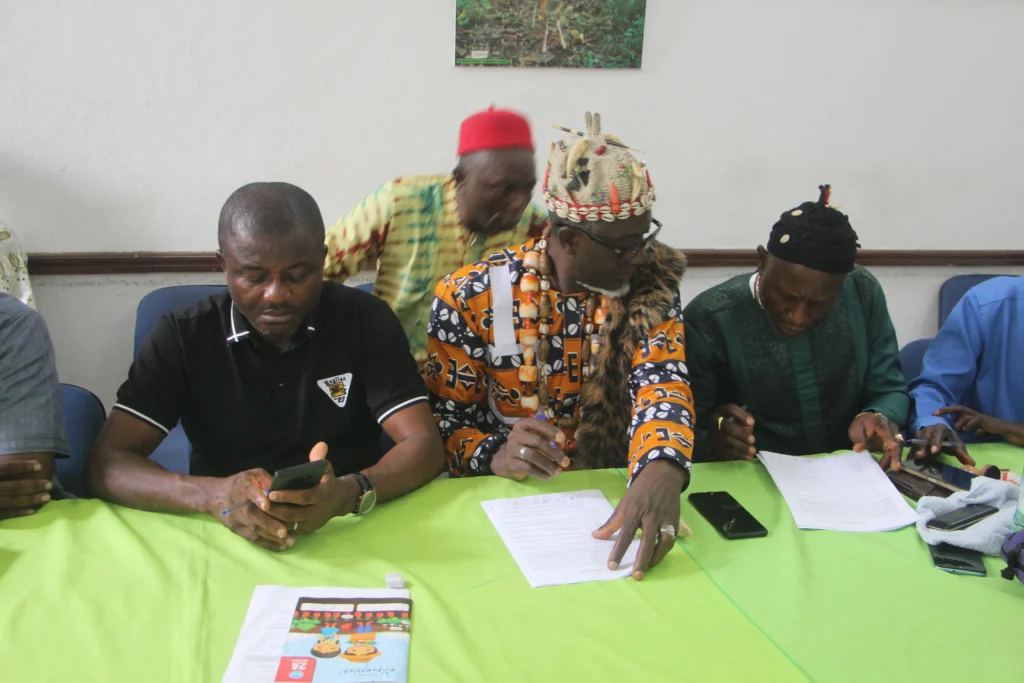
Supporting Alternative Livelihoods
Many communities around Banyang-Mbo depend on forest resources for food, income and household needs. To reduce pressure on wildlife and forest products, the sanctuary service and its partners support alternative livelihood activities that provide sustainable sources of income.
These initiatives include support for:
- Non-timber forest products
- Poultry farming
- Piggery
- Goat rearing
- Bee farming
- Soap production
- Cocoa and plantain value chains
- Agroforestry
- Nursery establishment
- Cassava transformation
By promoting alternative income-generating activities, the sanctuary helps reduce dependence on bushmeat hunting, illegal harvesting and unsustainable extraction of forest resources.
Empowering Women Through NTFPs
Women play an important role in the collection, processing and marketing of non-timber forest products around Banyang-Mbo Wildlife Sanctuary. These products are essential for household food security, income generation and local livelihoods.
In 2024, the sanctuary service supported the training of 30 women NTFP collectors in the Nguti cluster on the production of liquid soap and bar soap. This initiative helps women add value to local products, diversify household income and reduce pressure on forest resources.
Such livelihood activities are important because they connect conservation with practical economic benefits for communities. When local people gain sustainable income opportunities, they are more likely to support wildlife protection and forest conservation.
Sustainable Agriculture and Agroforestry
Agriculture is one of the main livelihood activities around Banyang-Mbo Wildlife Sanctuary. However, farming expansion can also contribute to forest loss when not properly managed. To address this, the sanctuary service supports sustainable agriculture and agroforestry practices that improve productivity while reducing pressure on the protected area.
As part of farm rejuvenation efforts, improved cocoa seedlings and non-timber forest product seedlings have been distributed to community members. Nursery materials have also been handed over to local communities to support tree planting and sustainable production.
These interventions help farmers improve their farms, restore degraded areas and integrate useful tree species into agricultural landscapes. In the long term, this contributes to better livelihoods and stronger protection of the sanctuary boundary.
Conservation Education and Youth Engagement
Education is central to the future of conservation in Banyang-Mbo Wildlife Sanctuary. The sanctuary service conducts awareness campaigns in schools and communities to promote better understanding of wildlife protection, forest management and environmental responsibility.
Since 2024, the sanctuary service has created 24 conservation education clubs in schools and communities across the five management clusters of the sanctuary. These clubs help pupils, students and community members learn about the importance of biodiversity, endangered species and sustainable forest use.
Study tours have also been organized with schools and communities, including visits to the Integrated Conservation Education Centre in Limbe. These activities expose young people to practical conservation knowledge and encourage them to become ambassadors for wildlife protection in their communities.
Community Development Support
Banyang-Mbo Wildlife Sanctuary also supports community development initiatives that strengthen cooperation between the sanctuary service and surrounding villages. These interventions are designed to improve local wellbeing while building goodwill for conservation.
Through support from the Programme for the Sustainable Management of Natural Resources in the South West Region, development actions have included water provision to communities such as Ebamut and Muangwekan, as well as support for farm-to-market road access.
Such initiatives demonstrate that conservation is not only about protecting wildlife, but also about improving relationships with communities and supporting development needs in areas surrounding the sanctuary.
Culture and the Forest
The communities around Banyang-Mbo Wildlife Sanctuary have deep cultural and spiritual connections with the forest. For the Banyang and Mbo people, the forest is a source of food, medicine, identity, traditional knowledge and cultural security.
Local people collect forest products such as wild yams, snails, caterpillars, medicinal plants and non-timber forest products. Men are often involved in hunting, fishing, trapping and palm nut harvesting, while women are strongly involved in the collection and processing of forest products for food and income.
Traditional belief systems also play an important role in conservation. In some communities, certain animals are considered sacred or spiritually important. Forest elephants and chimpanzees, for example, may be linked to totemic beliefs, where animals are believed to represent or carry the spirit of community members. Such beliefs can discourage the killing of certain species and serve as traditional conservation mechanisms.
Sacred sites, taboos and ancestral rules also contribute to traditional resource management. These cultural practices show that local knowledge can support modern conservation when communities are respected and meaningfully involved.
Human-Wildlife Interactions
Human-wildlife interaction is one of the major realities of life around Banyang-Mbo Wildlife Sanctuary. Communities live close to important wildlife habitats, and this creates both opportunities and challenges.
Crop-raiding is one of the most common sources of conflict. Animals such as elephants, cane rats and bush pigs may damage crops, creating tension between farmers and conservation authorities. For communities that depend heavily on farming, crop loss can affect household income and food security.
At the same time, hunting and bushmeat trade remain serious threats to wildlife. The use of guns, wire snares and other hunting methods has increased pressure on species such as drills, chimpanzees, pangolins, forest elephants and duikers.
The sanctuary service works with communities to address these challenges through awareness campaigns, surveillance, livelihood support and participatory conservation. By improving dialogue and creating alternative income sources, the sanctuary aims to reduce conflict while protecting endangered wildlife.
Local Participation in Patrols and Monitoring
Local knowledge is essential for effective conservation. Community members understand the forest, trails, wildlife signs, seasonal patterns and areas where illegal activities may occur. Their involvement in patrols and monitoring improves the ability of the sanctuary service to protect biodiversity.
Community participation includes:
- Reporting illegal activities
- Participating in community surveillance
- Supporting wildlife monitoring
- Assisting eco-guards and field teams
- Identifying hunting signs and snares
- Supporting conservation education
- Promoting local awareness of wildlife laws
When communities are trained and involved in conservation, they become active partners rather than passive observers. This strengthens both biodiversity protection and community ownership of the sanctuary.
Key Community Conservation Objectives
The community engagement approach of Banyang-Mbo Wildlife Sanctuary focuses on four main objectives:
Protecting Endangered Species
Community participation helps protect threatened species such as the drill, Nigeria-Cameroon chimpanzee, forest elephant and pangolins.
Reducing Illegal Hunting
Alternative livelihoods, awareness campaigns and community surveillance help reduce dependence on bushmeat and illegal wildlife trade.
Strengthening Local Livelihoods
Support for agriculture, NTFPs, livestock, soap production and agroforestry helps communities generate income in sustainable ways.
Building Conservation Ownership
By involving communities in decision-making, education, patrols and livelihood activities, the sanctuary promotes long-term local commitment to conservation.
Partners in Community Engagement
Community engagement in Banyang-Mbo Wildlife Sanctuary is supported through collaboration among government institutions, development programmes, local organizations and community groups.
Key partners include:
- Ministry of Forestry and Wildlife
- Programme for the Sustainable Management of Natural Resources in the South West Region
- Local support organizations
- Community interest groups
- Traditional authorities
- Schools and conservation education clubs
- Local councils and community institutions
The sanctuary service works with local support organizations involved in conservation education, land-use activities and livelihood implementation. These partnerships help ensure that conservation actions are locally relevant and community-focused.
Our Approach
Banyang-Mbo Wildlife Sanctuary believes that conservation must work for both people and nature. The sanctuary’s community engagement model is based on participation, respect for local knowledge, livelihood improvement and shared responsibility.
By supporting community surveillance, conservation education, alternative livelihoods, sustainable agriculture and cultural recognition, the sanctuary is building a stronger relationship between people and the protected area.
Protecting Banyang-Mbo is therefore not only the responsibility of conservation authorities. It is a shared mission involving communities, schools, traditional leaders, women, youth, partners and all those who depend on the forest for life and identity.